
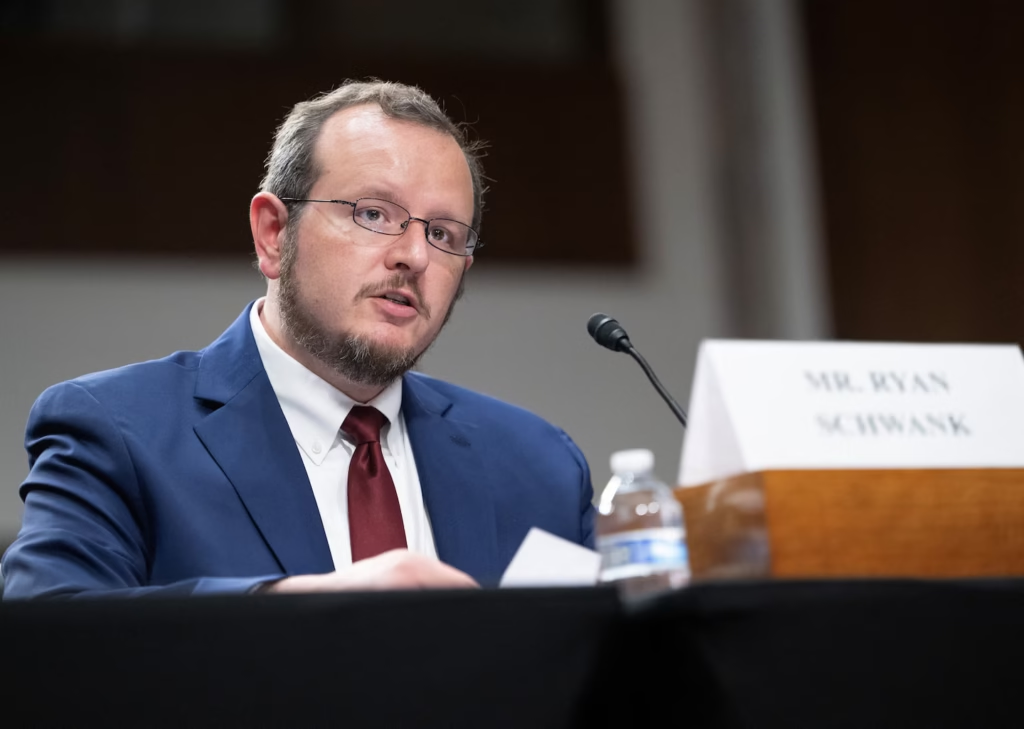
A former teacher at the U.S. Immigration and Customs Enforcement (ICE) training academy has made serious claims about how new immigration officers are being prepared for duty. Ryan Schwank spoke to members of Congress and said the agency cut large parts of its training program and then told lawmakers things that were not true about that training.
Schwank worked as an instructor and lawyer for ICE at its academy in Georgia. He told a public forum hosted by Democratic members of Congress that the agency has reduced the training time and materials that new officers receive.
According to Schwank’s testimony and documents he shared, ICE’s basic training program used to include many classes on topics such as legal limits on the use of force, how to safely handle firearms, how to arrest and detain people, and how to respect constitutional rights. Schwank said the agency removed hundreds of hours of this training as it expanded its workforce.
Schwank described the changes as dangerous and said that some essential topics were cut entirely or shortened greatly. He said this reduction has left new officers without the knowledge they need before going out into communities.
At the same time, Schwank said ICE told Congress that training was not reduced. He said that claiming training stayed the same was misleading because the content and quality of training had changed. Schwank and lawmakers raised this issue in front of congressional committees.
Schwank said the training is now “deficient, defective, and broken.” He explained that when recruits do not get strong instruction on rules, laws, and proper procedures, both officers and the public are at risk. He also said that recruits now get less time in class and fewer practical exams before they graduate.
One example Schwank mentioned was a reduction in classes about protesters’ rights and the use of force. What used to take hours in the classroom was reduced to a very short discussion, he said.
Schwank also raised concerns about how trainees were being told to handle searches of private homes. He said that internal guidance showed officers being allowed to enter houses without a judge-signed warrant, a move that he believed could violate constitutional protections.
The Department of Homeland Security, which oversees ICE, has denied that it cut required training hours in a way that weakens the program. The department said new officers continue to receive training on key topics, including firearm safety and constitutional protections.
Officials said the agency has streamlined the program but still provides the same core content, and recruits receive additional field training after leaving the academy.
Several members of Congress who heard Schwank’s testimony said they are concerned about the claims. They called for more oversight of how ICE trains its officers and how the agency reports to lawmakers. Some said they want to look more closely at the internal documents Schwank shared.
The issue comes amid broader national debates about immigration enforcement practices, officer conduct, and accountability. Critics argue that if training is not thorough, enforcement actions can lead to violations of rights or unsafe outcomes for the public and officers alike.