
The 2026 BAFTA Film Awards in London took an unexpected turn on Sunday night when a moment involving John Davidson, a campaigner with Tourette’s syndrome, briefly interrupted the prestigious ceremony. The event was being held at the Royal Festival Hall and was hosted by Alan Cumming.
Davidson, 54, is a well‑known advocate for awareness of Tourette syndrome whose life story inspired the film I Swear, which received multiple nominations at this year’s BAFTAs. Before the ceremony began, a floor manager introduced him to the audience and warned that he might make involuntary noises or movements during the night because of his condition.
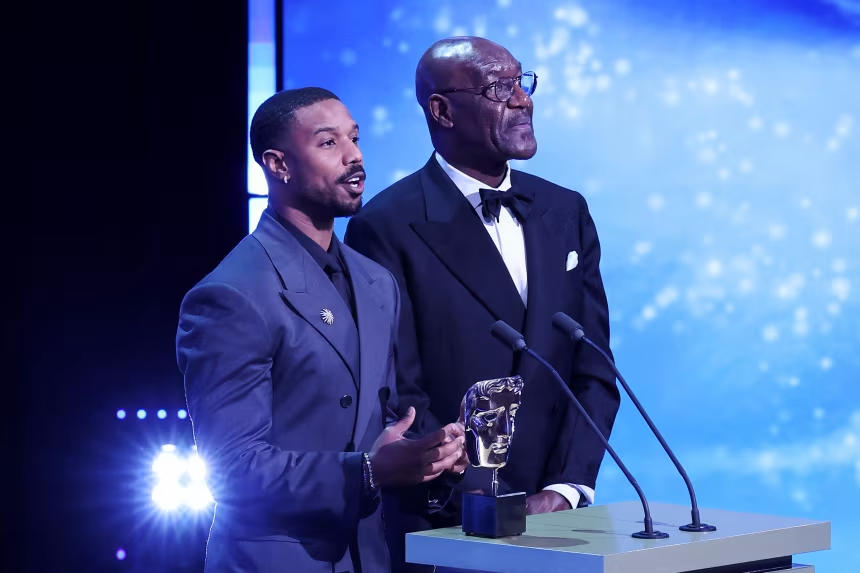
Some of Davidson’s tics were heard early in the show and included strong language while BAFTA chair Sara Putt was speaking. Later in the evening, while actors Michael B. Jordan and Delroy Lindo were on stage presenting the Best Visual Effects award, Davidson was heard shouting a racial slur, causing a moment of shock among the crowd and presenters.
Jordan and Lindo, who are both Black, paused briefly after the slur before continuing with the award presentation, highlighting both their professionalism and the awkward nature of the outburst. The ceremony was broadcast on the BBC, and the offensive language was picked up in the broadcast, prompting a wider reaction online and in the media.
Host Alan Cumming addressed the incident on stage, asking the audience for understanding and explaining that the language heard was an involuntary symptom of Tourette’s syndrome, not an intentional act. He told viewers and attendees that vociferous outbursts can be part of how Tourette’s can affect some people. Cumming apologized to anyone who had been offended by the strong language and thanked those present for showing respect and patience.
The BBC also issued an apology after the broadcast included the offensive language. A spokesperson said that the slur came as a result of involuntary verbal tics connected to Tourette syndrome and that it was not purposeful or directed by Davidson. The BBC expressed regret for any offence that viewers may have felt as a result of hearing the slur during the awards show.
Despite the interruption, the awards continued. I Swear went on to gain recognition at the ceremony, with actor Robert Aramayo winning the Best Leading Actor award and the EE Rising Star award for his role portraying Davidson in the film. Aramayo used his acceptance speech to highlight Davidson’s bravery and advocacy for awareness of the neurological condition.
The moment has sparked widespread discussion about the challenges faced by people with Tourette syndrome and how the public reacts to involuntary tics that involve strong language. Some commentators have used the incident to call for greater understanding of neurological conditions, while others have pointed to the need for sensitivity around race and offensive language in public settings.
In the wake of the BAFTA interruption, coverage of the incident has highlighted both sides of the conversation. Advocates for disability awareness say the event raises important questions about acceptance and understanding, while critics emphasize the emotional impact a racial slur can have, especially when broadcast to a wide audience. The outburst has become one of the most talked‑about moments from this year’s BAFTA Film Awards, showing how an unexpected interruption can shift the focus of a major cultural event almost instantly.